Mitered Edge Quartz for a Thick Slab Look
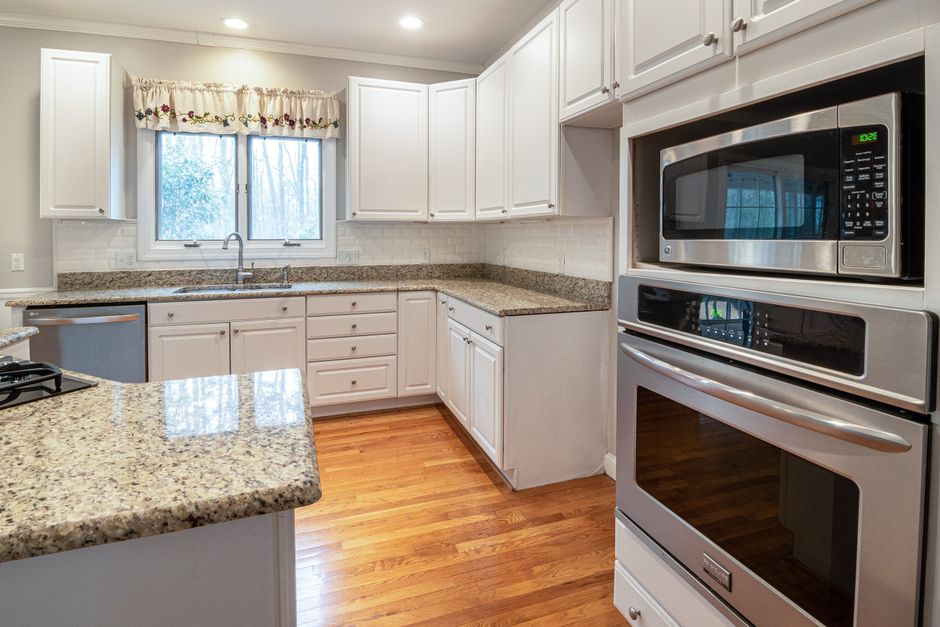
Two strips cut at forty five degrees, one for the top and one for the apron, add up to one thick looking edge from a slab only a little more than an inch deep, as the notes at quartz countertops temecula the jack condo describe it. The method is common on kitchen islands in Temecula, CA that want a heavy look without the weight of a solid block of quartz. It takes more labor than a plain eased edge, since there are twice as many pieces to cut and glue, and a long run of corner takes most of a day of the crew's time.
How the miter is cut
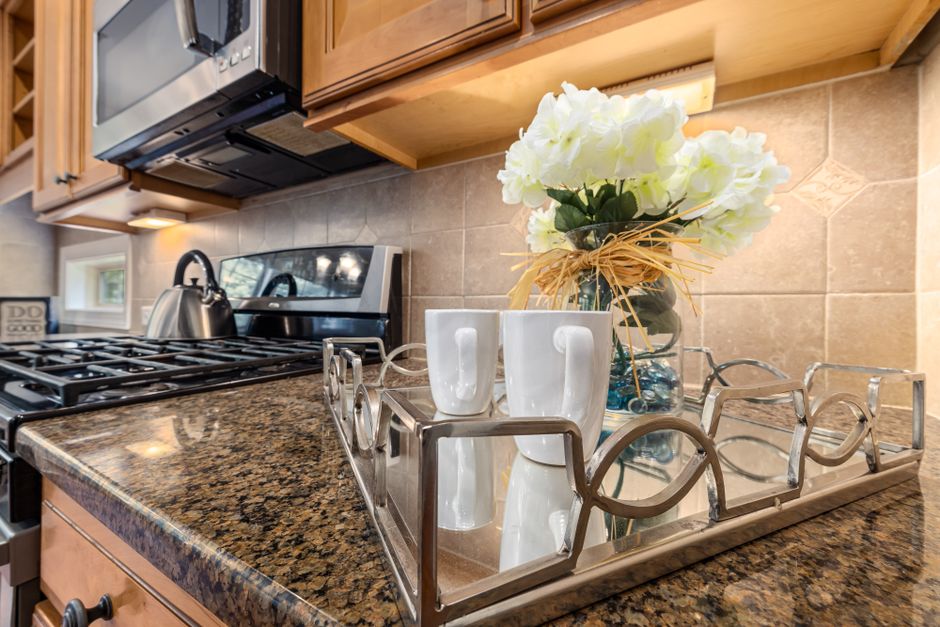
The fabricator cuts the top with a bevel on its front edge and cuts a separate strip the same way. The two meet at the corner like the sides of a picture frame. Glue goes into the joint, the strip is pulled tight and held with clamps and tape, and the excess is scraped away once it cures. The slab pattern is cut so the veins appear to wrap the corner.
Why it looks thick
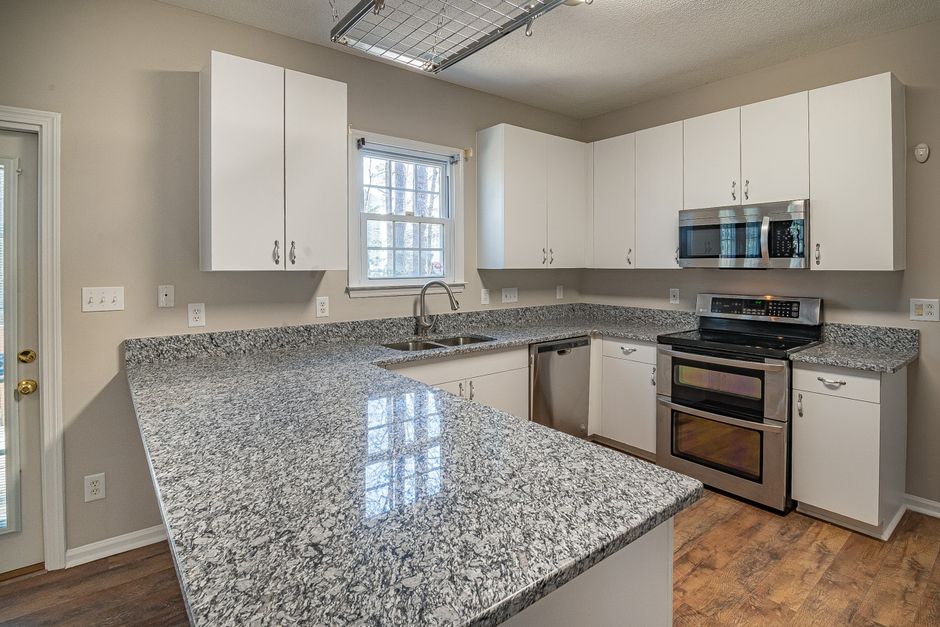
The apron hangs below the top, so the edge reads as three or four inches of solid material. A flat polished face on the front carries the pattern around without a visible line. Compared with a laminated edge, where a second strip is glued flat under the top, a miter shows no glue line on the face and keeps the vein pattern continuous.
Chip risk at the corner
A mitered corner is sharp, and a sharp corner chips if something hard strikes it. Fabricators ease the corner slightly with a light pass of the tool, which takes away the razor edge without changing the look. A busy family kitchen with kids and heavy cookware benefits from that small radius, and a bullnose or an eased edge is a quieter choice where traffic is heavy.
Where it holds up well
A miter does well on an island with a clear overhang, away from the dishwasher door and the walkway. It is a poor fit for a corner that sees constant knocks. At a waterfall edge the same miter is used at the corner where the top turns down the side, so the technique carries over.
Fit with other materials
Granite and quartzite can be mitered in the same way, and so can porcelain slab. Marble miters well but chips more easily at the corner. Each material needs its own blade, and a dry fit on the template confirms the angle before the glue goes in.